Call Us Today

-
-
Working Hours
Mon - Fri: 9 am to 6 pm
-
32 N Gould St, Sheridan
WY 82801, USA

03
Aug
Geopolitics:
Recent geopolitical events have hit global energy markets hard. The Russian invasion of Ukraine caused a 29.1 percent GDP loss for Ukraine in 2022 alone and disrupted agricultural and energy trade worldwide. The October 2023 attacks in Israel and the subsequent regional escalation—including Houthi involvement in the Red Sea and Hezbollah in Lebanon—have further destabilized major energy supply routes. When the President of Iran died in a helicopter crash in May 2024, political uncertainty in the Middle East intensified even more.
All of these countries are either major oil suppliers or located in energy-rich regions. Research confirms that geopolitical uncertainties amplify energy price volatility (Liu et al., 2021) and have significant adverse impacts on oil prices, especially in bearish markets (Qin et al., 2020). For buyers, this means supply disruptions and price spikes can come with very little warning. At Riyada Global, we understand that navigating unstable markets requires more than just a contract—it requires a partner who monitors geopolitical developments in real time, maintains diversified supply networks, and acts swiftly to secure alternative sources when traditional routes become compromised. Our buyers gain stability not by predicting crises, but by being connected to a strategic link that adapts when the world shifts.
Sanctions:
Russia is the world’s largest exporter of energy. Its oil, gas, and coal revenues are primary targets of sanctions policy. But there is a catch: energy sanctions backfire severely if they trigger price increases that hurt the sanctioning countries themselves.
After the first round of sanctions, spot demand for Russian oil dropped by 2.5 million barrels per day. Global oil prices jumped 30 percent, while Russian crude sold at a 25 percent discount. By early March, the US banned all Russian energy imports. The UK phased out Russian oil. The EU committed to reducing Russian gas by two-thirds. And Germany added Russian coal, gas, and almost all oil to its moratoria.
Two things matter for buyers. First, high oil prices influence inflation and interest rates. Second, it takes about 70 liters of crude oil to produce $1,000 worth of global GDP. However, efficiency improvements mean the world needs 2.2 million fewer barrels of oil each year to sustain the same GDP level. Historical data suggests no need to panic at current prices—especially if the spike is short-lived. At Riyada Global, we help buyers navigate sanction-driven market shifts with precision and compliance. Our role is not to predict sanctions but to ensure every transaction avoids restricted parties, adheres to international trade laws, and secures alternative supply lines when traditional sources become off-limits. In a world where energy sanctions can change overnight, having a strategic link that understands both the legal boundaries and the market alternatives is not optional—it is essential.
 Freight Disruptions:
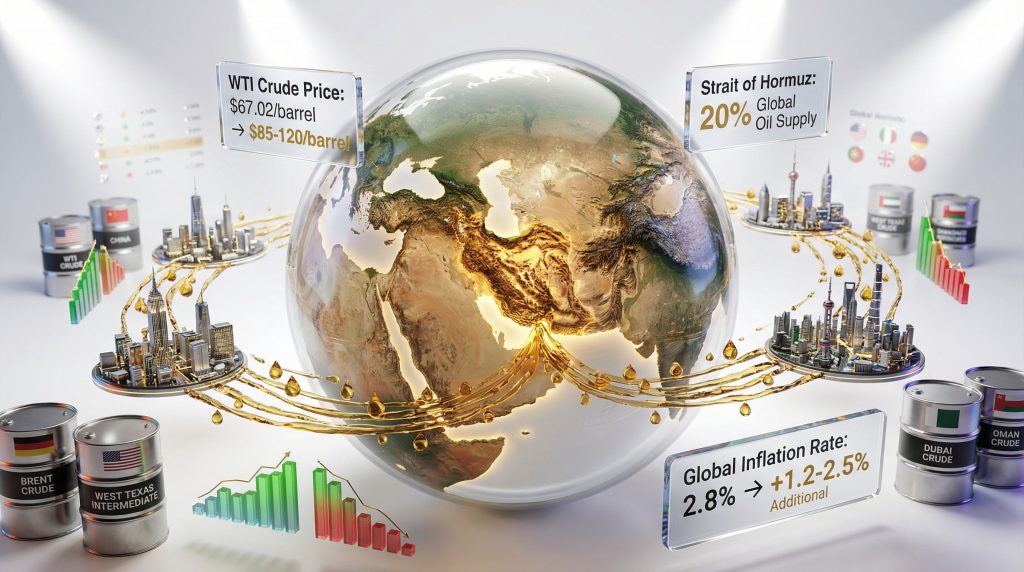
On March 10, 2026, UNCTAD released an alarming analysis. The Strait of Hormuz—which carries one quarter of global seaborne oil trade—has seen military escalation disrupting shipping flows. Brent crude rose above $90 per barrel. Freight rates and war risk insurance premiums are surging. One-third of global seaborne fertilizer trade also passes through the Strait. Developing economies are the most exposed, as high debt burdens leave them unable to absorb new price shocks. Past crises—COVID-19 and the Ukraine war—have shown how energy, transport, and agricultural disruptions spread quickly across interconnected markets. At Riyada Global, we know that a stable fuel price on paper means nothing if the fuel cannot reach its destination. That is why we build logistics resilience into every transaction—monitoring chokepoints like the Strait of Hormuz, securing alternative routing options, and working with shipping partners who understand the real-time risks of war risk zones. When freight rates spike and insurance premiums soar, our buyers benefit from a partner who absorbs complexity, secures capacity, and keeps supply moving even when conventional routes become contested. Reference: UNCTAD Press Release (10 March 2026)
Freight Disruptions:
On March 10, 2026, UNCTAD released an alarming analysis. The Strait of Hormuz—which carries one quarter of global seaborne oil trade—has seen military escalation disrupting shipping flows. Brent crude rose above $90 per barrel. Freight rates and war risk insurance premiums are surging. One-third of global seaborne fertilizer trade also passes through the Strait. Developing economies are the most exposed, as high debt burdens leave them unable to absorb new price shocks. Past crises—COVID-19 and the Ukraine war—have shown how energy, transport, and agricultural disruptions spread quickly across interconnected markets. At Riyada Global, we know that a stable fuel price on paper means nothing if the fuel cannot reach its destination. That is why we build logistics resilience into every transaction—monitoring chokepoints like the Strait of Hormuz, securing alternative routing options, and working with shipping partners who understand the real-time risks of war risk zones. When freight rates spike and insurance premiums soar, our buyers benefit from a partner who absorbs complexity, secures capacity, and keeps supply moving even when conventional routes become contested. Reference: UNCTAD Press Release (10 March 2026)
 Price Volatility:
In efficient markets, prices change to correct supply-demand imbalances. But natural gas is different. Demand is heavily affected by weather, which changes rapidly. Producers cannot ramp up output overnight—new drilling takes three to nine months. So near-term supply is inelastic.
To evaluate energy price volatility properly, buyers must consider three dimensions: the geographic market (location matters), the time interval (daily vs monthly averages), and the point in the supply chain (wellhead, pipeline, or wholesale).
At Riyada Global, we recognize that natural gas does not behave like other commodities. Its unique supply-demand dynamics demand a specialized approach—one that accounts for seasonal weather patterns, regional infrastructure constraints, and the long lead times of production expansion. For buyers navigating this complex landscape, we provide more than just product. We provide market intelligence, flexible sourcing options, and strategic timing advice that helps mitigate the risks of sudden price swings. In a market where the weather can change your cost structure overnight, having a partner who understands the full volatility framework is the difference between reacting to crises and anticipating them.
Reference: American Gas Foundation
Price Volatility:
In efficient markets, prices change to correct supply-demand imbalances. But natural gas is different. Demand is heavily affected by weather, which changes rapidly. Producers cannot ramp up output overnight—new drilling takes three to nine months. So near-term supply is inelastic.
To evaluate energy price volatility properly, buyers must consider three dimensions: the geographic market (location matters), the time interval (daily vs monthly averages), and the point in the supply chain (wellhead, pipeline, or wholesale).
At Riyada Global, we recognize that natural gas does not behave like other commodities. Its unique supply-demand dynamics demand a specialized approach—one that accounts for seasonal weather patterns, regional infrastructure constraints, and the long lead times of production expansion. For buyers navigating this complex landscape, we provide more than just product. We provide market intelligence, flexible sourcing options, and strategic timing advice that helps mitigate the risks of sudden price swings. In a market where the weather can change your cost structure overnight, having a partner who understands the full volatility framework is the difference between reacting to crises and anticipating them.
Reference: American Gas Foundation
 By Rasheduz Zaman
Co-founder
Riyada Global
Published on July 20, 2025
By Rasheduz Zaman
Co-founder
Riyada Global
Published on July 20, 2025
Freight Disruptions:
On March 10, 2026, UNCTAD released an alarming analysis. The Strait of Hormuz—which carries one quarter of global seaborne oil trade—has seen military escalation disrupting shipping flows. Brent crude rose above $90 per barrel. Freight rates and war risk insurance premiums are surging. One-third of global seaborne fertilizer trade also passes through the Strait. Developing economies are the most exposed, as high debt burdens leave them unable to absorb new price shocks. Past crises—COVID-19 and the Ukraine war—have shown how energy, transport, and agricultural disruptions spread quickly across interconnected markets. At Riyada Global, we know that a stable fuel price on paper means nothing if the fuel cannot reach its destination. That is why we build logistics resilience into every transaction—monitoring chokepoints like the Strait of Hormuz, securing alternative routing options, and working with shipping partners who understand the real-time risks of war risk zones. When freight rates spike and insurance premiums soar, our buyers benefit from a partner who absorbs complexity, secures capacity, and keeps supply moving even when conventional routes become contested. Reference: UNCTAD Press Release (10 March 2026)
Price Volatility:
In efficient markets, prices change to correct supply-demand imbalances. But natural gas is different. Demand is heavily affected by weather, which changes rapidly. Producers cannot ramp up output overnight—new drilling takes three to nine months. So near-term supply is inelastic.
To evaluate energy price volatility properly, buyers must consider three dimensions: the geographic market (location matters), the time interval (daily vs monthly averages), and the point in the supply chain (wellhead, pipeline, or wholesale).
At Riyada Global, we recognize that natural gas does not behave like other commodities. Its unique supply-demand dynamics demand a specialized approach—one that accounts for seasonal weather patterns, regional infrastructure constraints, and the long lead times of production expansion. For buyers navigating this complex landscape, we provide more than just product. We provide market intelligence, flexible sourcing options, and strategic timing advice that helps mitigate the risks of sudden price swings. In a market where the weather can change your cost structure overnight, having a partner who understands the full volatility framework is the difference between reacting to crises and anticipating them.
Reference: American Gas Foundation
By Rasheduz Zaman
Co-founder
Riyada Global
Published on July 20, 2025
Leave A Comment